
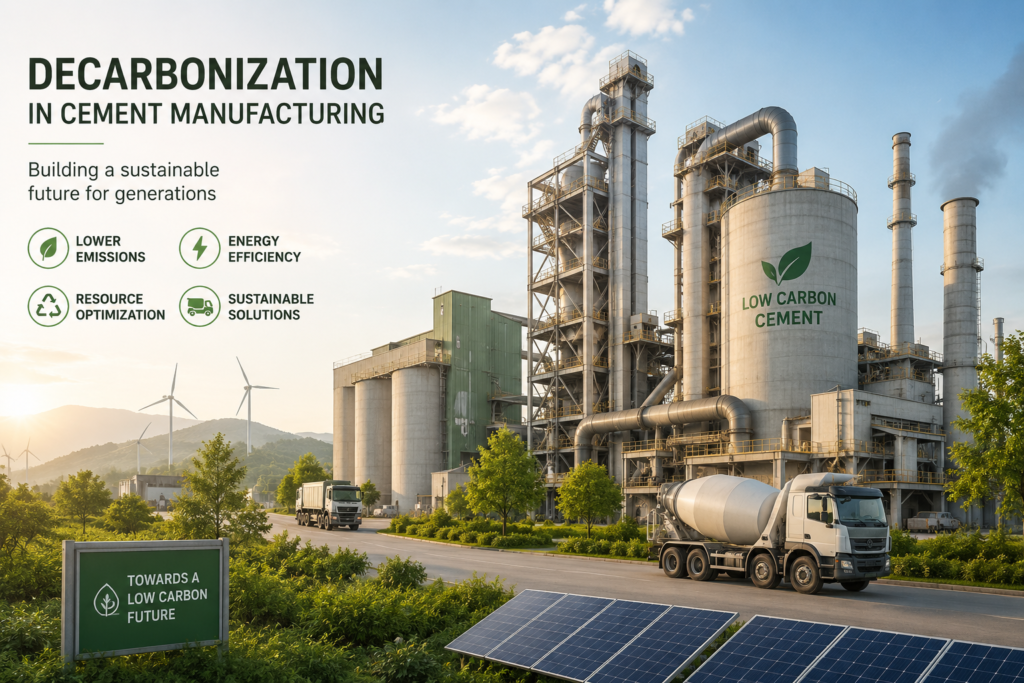
Sustainability and carbon reduction are becoming major priorities for cement manufacturers worldwide. As governments, businesses, and communities push for greener construction practices, the cement industry is under increasing pressure to reduce its environmental footprint while maintaining operational efficiency and profitability.
A recent announcement by Cemex regarding a significant increase in its investment toward plant decarbonization highlights the growing commitment of industry leaders to sustainable manufacturing and long-term environmental responsibility.
A Major Step Toward Sustainable Cement Production
Cemex has announced plans to invest €451 million in the decarbonization of its Alcanar plant in Spain. The project has also received substantial support through government funding, demonstrating how public and private sectors are increasingly working together to accelerate industrial sustainability initiatives.
The increased investment reflects the industry’s recognition that environmental responsibility is no longer just a compliance requirement—it is becoming a strategic business priority.
Large-scale projects such as this are expected to focus on reducing carbon emissions, improving energy efficiency, and adopting innovative technologies that support cleaner cement production.
Why Decarbonization Matters
The cement industry plays a critical role in global infrastructure development, but it is also one of the sectors facing significant pressure to reduce greenhouse gas emissions.
As sustainability targets become more ambitious worldwide, manufacturers are being encouraged to explore solutions that can help them:
- Reduce carbon emissions
- Improve energy efficiency
- Optimize resource utilization
- Minimize waste generation
- Strengthen long-term competitiveness
Companies that proactively invest in these areas are likely to be better positioned to meet future regulatory requirements and market expectations.
The Growing Role of Government Support
One notable aspect of this investment is the level of government involvement. Public funding programs designed to support industrial decarbonization are becoming increasingly common across many regions.
Such initiatives can help manufacturers accelerate modernization efforts, adopt cleaner technologies, and reduce the financial risks associated with large-scale sustainability projects.
This trend may encourage other organizations within the construction materials sector to evaluate opportunities for improving environmental performance while maintaining operational efficiency.
Beyond Infrastructure: The Importance of Operational Excellence
While major investments in technology and infrastructure often attract headlines, achieving sustainability goals also requires a strong focus on day-to-day operational performance.
Improving production planning, reducing material wastage, optimizing logistics, monitoring fuel consumption, and enhancing visibility across business operations can contribute significantly to both environmental and financial performance.
Organizations that combine sustainability initiatives with operational excellence are likely to achieve the greatest long-term benefits.
What This Means for the Industry
Cemex’s investment is more than a single company announcement—it reflects a broader shift taking place across the cement and construction materials industry.
Manufacturers around the world are increasingly recognizing that sustainability, innovation, and operational efficiency must work together to support future growth.
As the industry continues to evolve, investments in cleaner production methods, resource optimization, and digital transformation will play an increasingly important role in shaping the next generation of cement manufacturing.
Turning Sustainability Goals into Operational Results
Many sustainability initiatives begin with major investments, but long-term success often depends on how efficiently daily operations are managed.
For cement and concrete producers, challenges such as production planning, raw material tracking, dispatch management, fuel monitoring, inventory control, maintenance scheduling, and business visibility can directly impact both operational costs and environmental performance.
Modern digital management systems help organizations gain real-time insights into their operations, reduce inefficiencies, improve resource utilization, and support data-driven decision-making.
As the industry continues its transition toward more sustainable manufacturing, companies that combine operational excellence with digital transformation will be better positioned to achieve their business and environmental objectives.
Conclusion
Whether investing millions in decarbonization projects or focusing on improving day-to-day operational efficiency, the industry’s direction is clear: smarter, more sustainable operations will define the future of cement manufacturing.
Organizations that embrace technology, data visibility, and process optimization today will be better prepared for tomorrow’s challenges.
About Bhavantu Software
Bhavantu Software provides ERP and business management solutions for ready-mix concrete, cement, construction materials, and manufacturing businesses. Our solutions help organizations improve operational visibility, streamline processes, and make better business decisions through integrated digital management systems.
Interested in exploring digital transformation opportunities for your business? Contact us to learn more.
Source: Global Cement
Link to Source: Cemex increases Alcanar plant decarbonisation investment