Introduction: Smarter RMC Management for a Faster Construction Industry
The ready mix concrete industry is becoming increasingly technology-driven in 2026. Growing construction activity, tighter delivery schedules, rising material costs, fleet expenses, and increasing customer expectations are pushing RMC businesses to improve operational control.
Managing production, raw materials, customer orders, dispatches, vehicles, fuel, quality records, accounts, and multiple plants through spreadsheets or disconnected systems can create unnecessary delays and data errors.
RMC ERP Software provides a centralized digital platform that connects these business activities and gives management better visibility across the entire operation.
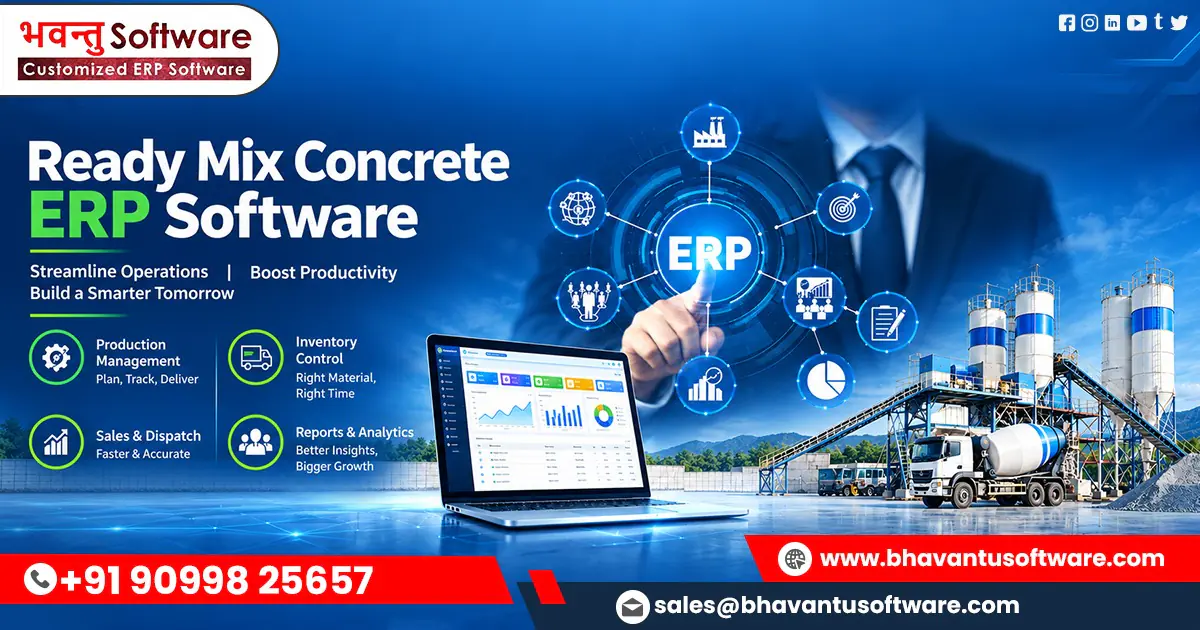
Bhavantu Software offers an integrated RMC ERP solution designed to help ready mix concrete businesses streamline production planning, inventory, dispatch, fleet operations, financial processes, reporting, and customer management.
Why Do RMC Businesses Need ERP Software in 2026?
Ready mix concrete operations depend on accurate coordination between production plants, inventory teams, dispatch departments, transport fleets, accounts teams, and construction sites.
Manual processes can make it difficult to identify delays, monitor material consumption, track deliveries, or understand operational costs.
A specialized RMC ERP system helps businesses:
- Centralize operational and commercial information.
- Reduce dependency on spreadsheets and manual registers.
- Improve coordination between production, dispatch, stores, fleet, and accounts.
- Monitor business activities through real-time dashboards.
- Reduce duplicate data entry and operational errors.
- Improve material, vehicle, and manpower utilization.
- Support single-plant and multi-plant operations.
- Generate structured reports for faster management decisions.
How Can RMC ERP Software Simplify Ready Mix Concrete Operations?
1. Streamline Production and Batching Planning
Plan and monitor concrete production while maintaining batch-wise production information and plant performance data.
2. Improve Raw Material and Inventory Management
Monitor material availability, receipts, consumption, stock levels, transfers, and inventory movement to maintain better control over essential raw materials.
3. Simplify Customer Orders and Dispatch Planning
Manage customer requirements, project details, concrete orders, delivery schedules, plant allocation, and dispatch planning through a centralized system.
4. Strengthen Fleet Management
Maintain centralized records for vehicles, drivers, trips, maintenance, insurance, licences, and other fleet-related information.
5. Control Fuel Consumption and Fleet Costs
Track fuel usage and related fleet expenses to help identify abnormal consumption, control operating costs, and improve vehicle utilization.
6. Maintain Better Concrete Quality Records
Maintain structured production and quality-related information to support consistent monitoring and better operational control.
7. Connect Finance with Daily Operations
Connect sales, purchases, expenses, receivables, payables, and other financial information with day-to-day RMC activities.
Essential Features of RMC ERP Software
Production Management
Plan and monitor concrete production while maintaining batch-wise production information and plant performance data.
Order Management
Manage enquiries, quotations, customer orders, projects, concrete requirements, and order-related information through one platform.
Dispatch Management
Coordinate delivery schedules, plant allocation, vehicle planning, dispatch quantities, and delivery information.
Inventory Management
Monitor material receipts, stock levels, consumption, transfers, and inventory movement across operations.
Fleet Management
Maintain centralized records for vehicles, drivers, trips, maintenance, insurance, fuel, and licence expiry.
GPS Integration
Connect compatible third-party GPS systems through secure API integration to improve vehicle tracking and dispatch visibility.
Financial Management
Organize sales, purchases, expenses, receivables, payables, and related financial information within the ERP environment.
Reports and Dashboards
Access business reports and dashboards covering production, inventory, dispatch, fleet, sales, and financial performance.
Alerts and Notifications
Receive timely alerts for operational activities such as low stock, pending deliveries, maintenance requirements, and important expiry dates.
How Does SaaS-Based RMC ERP Help Businesses?
A SaaS-based ERP model gives RMC businesses access to essential operational information without requiring extensive on-premise infrastructure.
Anywhere Business Access
Authorized users can access relevant business information through internet-connected devices according to their assigned permissions.
Lower Infrastructure Requirements
Cloud-based deployment can reduce the need for dedicated hardware and extensive internal IT maintenance.
Easier Business Expansion
Businesses can add plants, users, and operational requirements as their RMC network grows.
Multi-Plant Visibility
Management can monitor information from different RMC locations through a centralized ERP environment.
Centralized Data
Production, inventory, dispatch, fleet, customer, and financial information remains connected instead of being scattered across separate systems.
Simplified Updates and Maintenance
A SaaS approach can make software updates and system maintenance easier to manage compared with traditional standalone deployments.
How Can RMC ERP Improve Business Decisions in 2026?
The major advantage of ERP is not simply automation. It is the ability to convert daily operational data into useful business information.
Management can use ERP reports to evaluate:
- Production efficiency.
- Material consumption.
- Inventory movement.
- Dispatch performance.
- Vehicle utilization.
- Fuel consumption.
- Sales performance.
- Customer receivables.
- Operational expenses.
- Plant-wise performance.
With better visibility, decision-makers can identify inefficiencies earlier and take corrective action based on reliable business information.
Frequently Asked Questions
Q1: Can RMC ERP Software manage multiple plants?
A1: Yes. A scalable ERP solution can provide centralized visibility and management for businesses operating multiple RMC plants and locations.
Q2: Does RMC ERP support GPS integration?
A2: Yes. Compatible third-party GPS systems can be connected through secure API integration to improve vehicle visibility and fleet coordination.
Q3: How does RMC ERP control inventory?
A3: The software tracks material receipts, stock levels, consumption, transfers, and inventory movement to provide better control over raw materials.
Q4: Is SaaS-based RMC ERP suitable for growing businesses?
A4: Yes. SaaS-based ERP can support business expansion by allowing organizations to scale users, plants, and operational requirements without extensive on-premise infrastructure.
Transform Your RMC Operations with Bhavantu Software
Transform your RMC operations with Bhavantu Software’s intelligent ERP platform and gain complete control over production, dispatch, inventory, and fleet.
Website: www.bhavantusoftware.com
Phone: +91 90998 25657
Email: sales@bhavantusoftware.com